Thursday 4th December 2025
Plantlife’s Guide to Winter Fungi
Our friends at Plantlife have shared this helpful guide in looking for winter fungi and the benefits
Heading out on a winter walk? Here’s what to look for…
Fungi are often associated with autumn, when the weather is mild, damp, and perfect for fruiting bodies to appear. But many species continue to grow through winter, offering amazing colour and texture on cold, crisp days.
Even though you may not see much above ground, fungi are incredibly active right now. Beneath your feet, huge networks of mycelium are busy breaking down leaves, twigs, and organic matter. This underground system feeds plants, boosts soil health, and keeps entire ecosystems thriving.
What Exactly Are Fungi?
Fungi aren’t plants or animals; they’re an entirely separate kingdom. The UK is home to around 15,000 species, with thousands more yet to be identified.
Fungi are essential for life as we know it. They:
Create healthy soil
Help plants grow
Break down organic matter
Support trees and wildflowers
Provide food for wildlife (and sometimes, us!)
Where Can You Find Fungi in Winter?
You can spot winter fungi in:
Woodlands
Parks and grassy areas
Lawns and meadows
On tree trunks and dead wood
Even in cow dung (yes, really!)
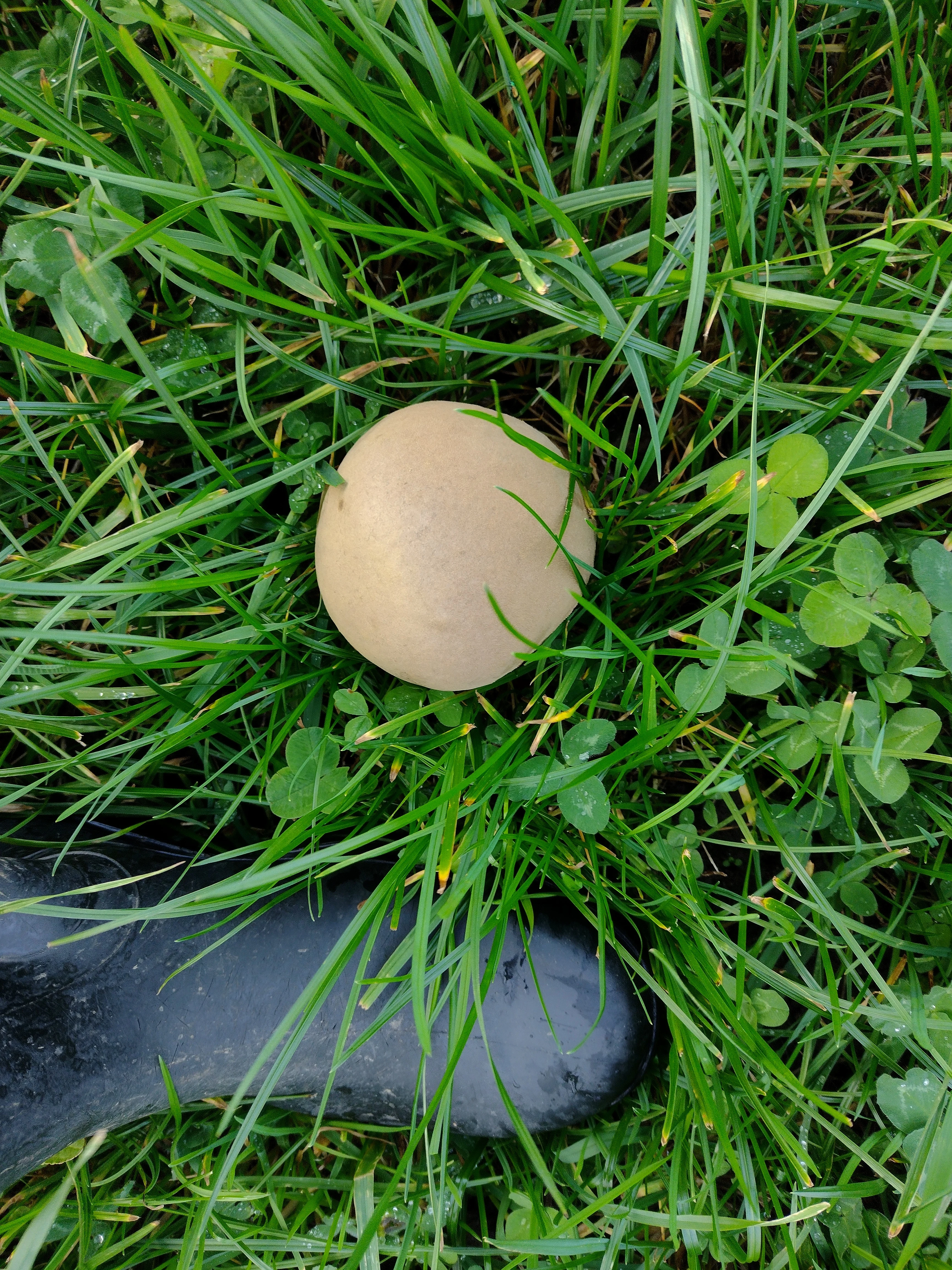
At Yeo Valley HQ, fungi thrive across our organic pastures. This year, the team spotted a Giant Puffball emerging from sileage-rich ground, a sign of healthy soil and a thriving habitat. With ongoing restoration work and careful grazing management, fungi diversity is predicted to grow even more in the coming years.
Top 5 Fungi to Spot in Winter - Plantlife
Perfect for nature lovers.
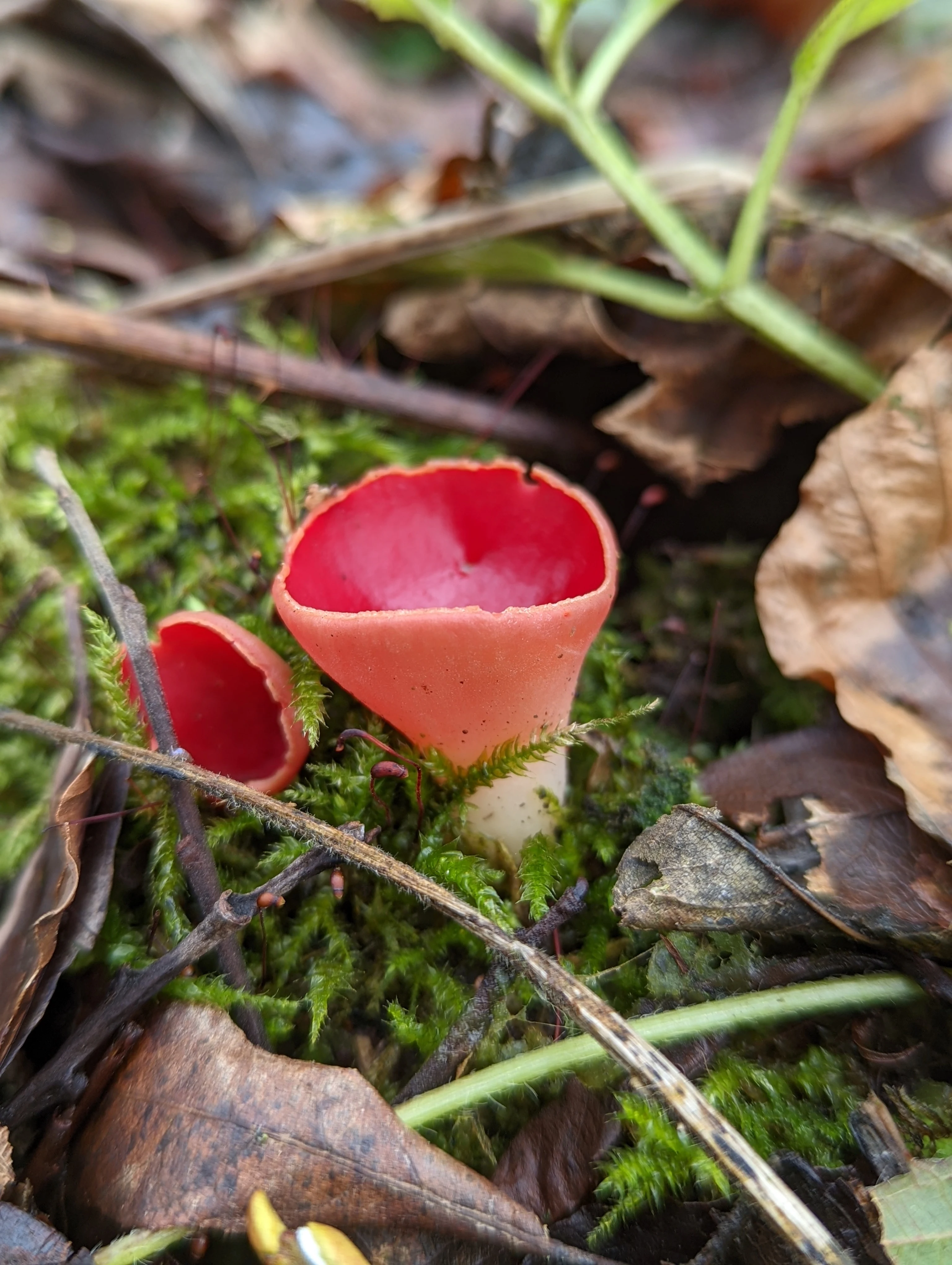
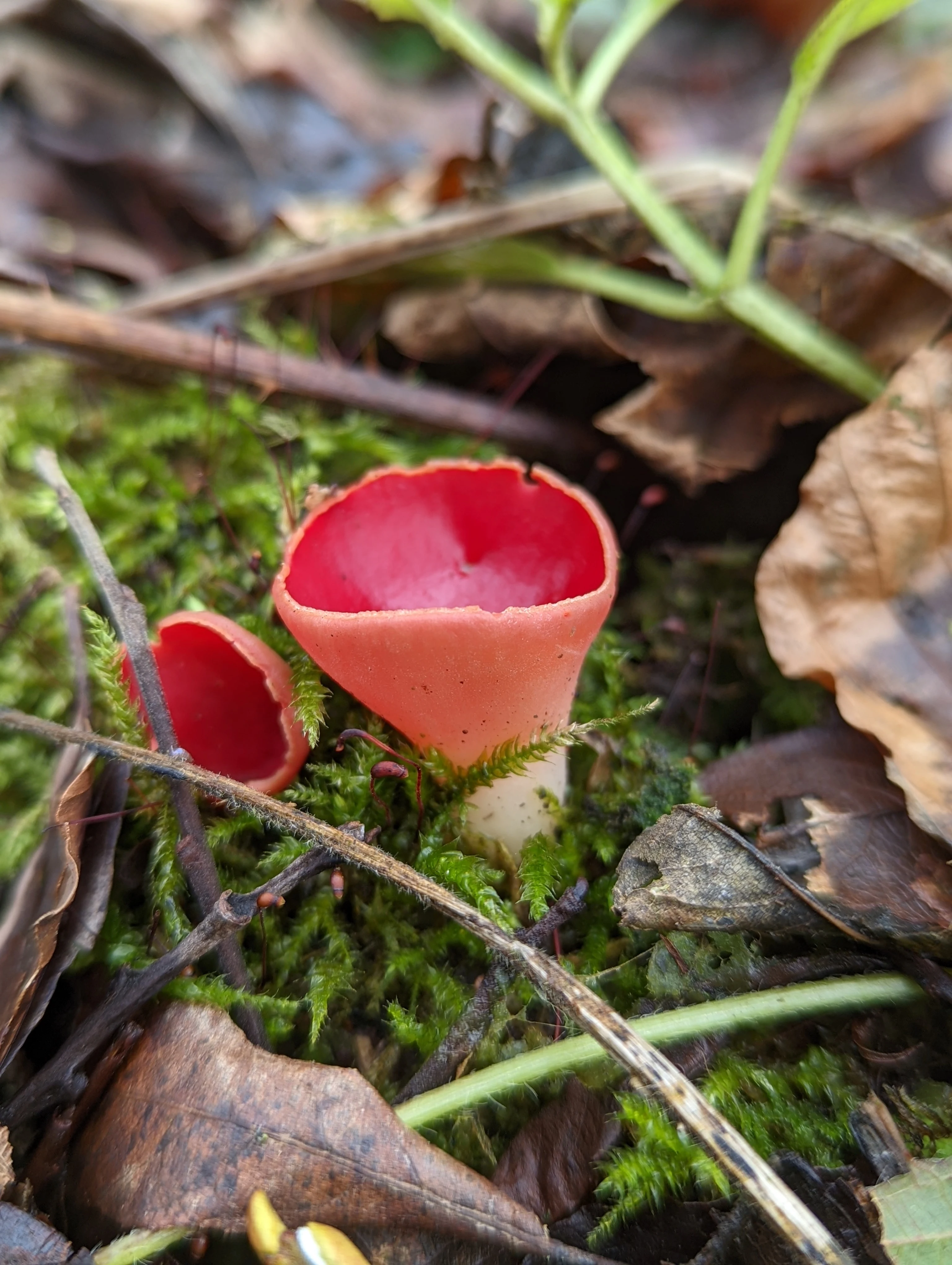
1. Scarlet Elfcup (Sarcoscypha austriaca)
Bright red, cup-shaped fungi that appear in damp woodland. Folklore says woodland elves used them as tiny bath tubs!
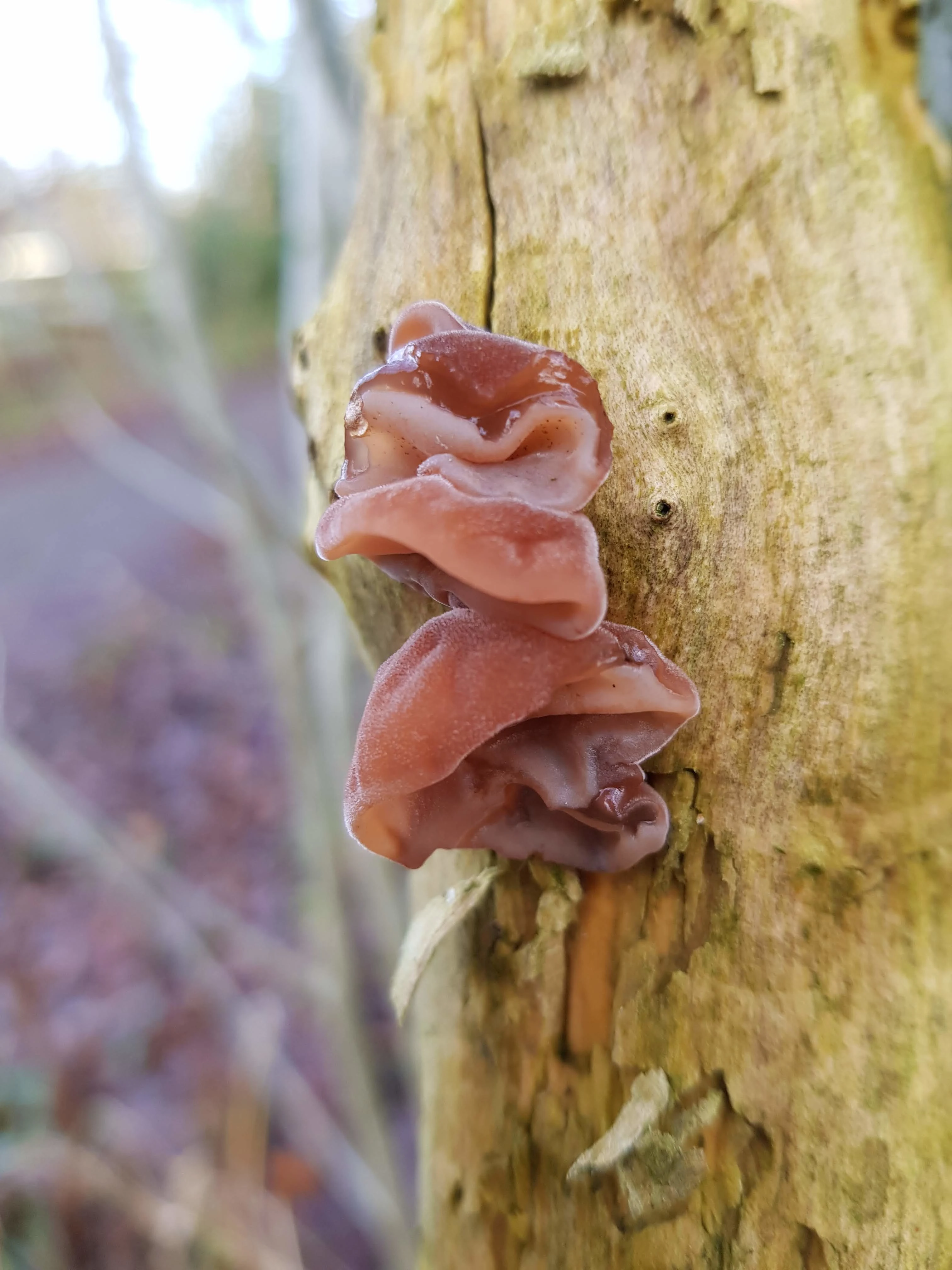
2. Jelly Ear (Auricularia auricula)
Brown, jelly-like, and shaped just like an ear. You’ll find them on old trees and fallen branches, especially in colder months.
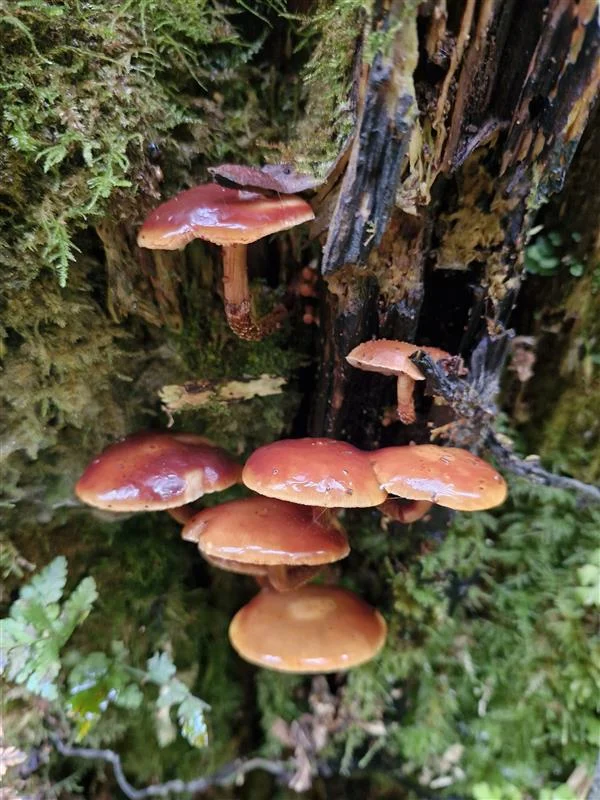
3. Velvet Shank (Flammulina velutipes)
A true winter mushroom with bright orange caps. They grow in tight clusters on dead wood and stay vibrant even in frosty weather.
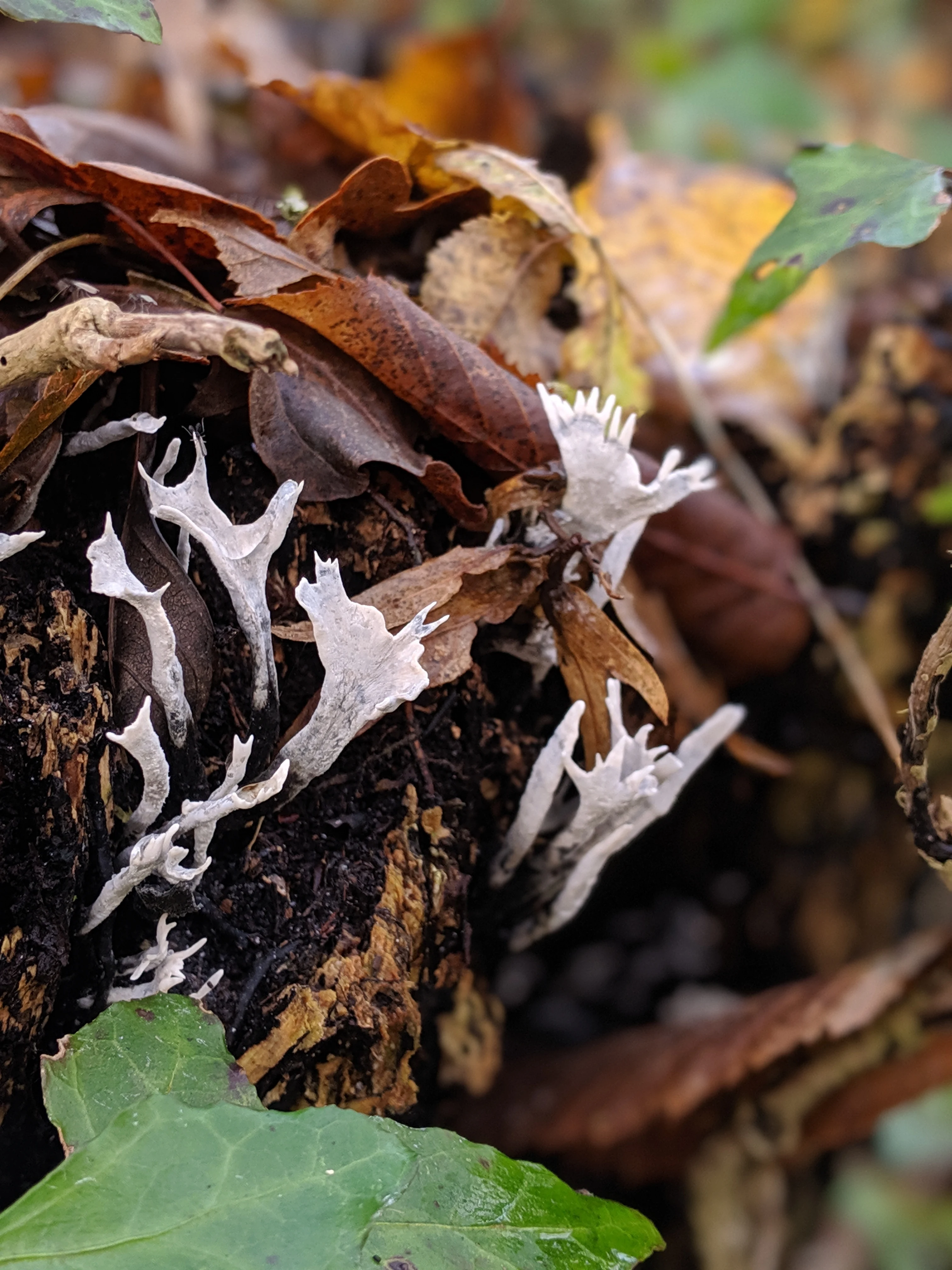
4. Candlesnuff Fungus (Xylaria hypoxylon)
Black-and-white, matchstick-shaped fungi that look like snuffed-out candle wicks. A common sight on mossy tree stumps.
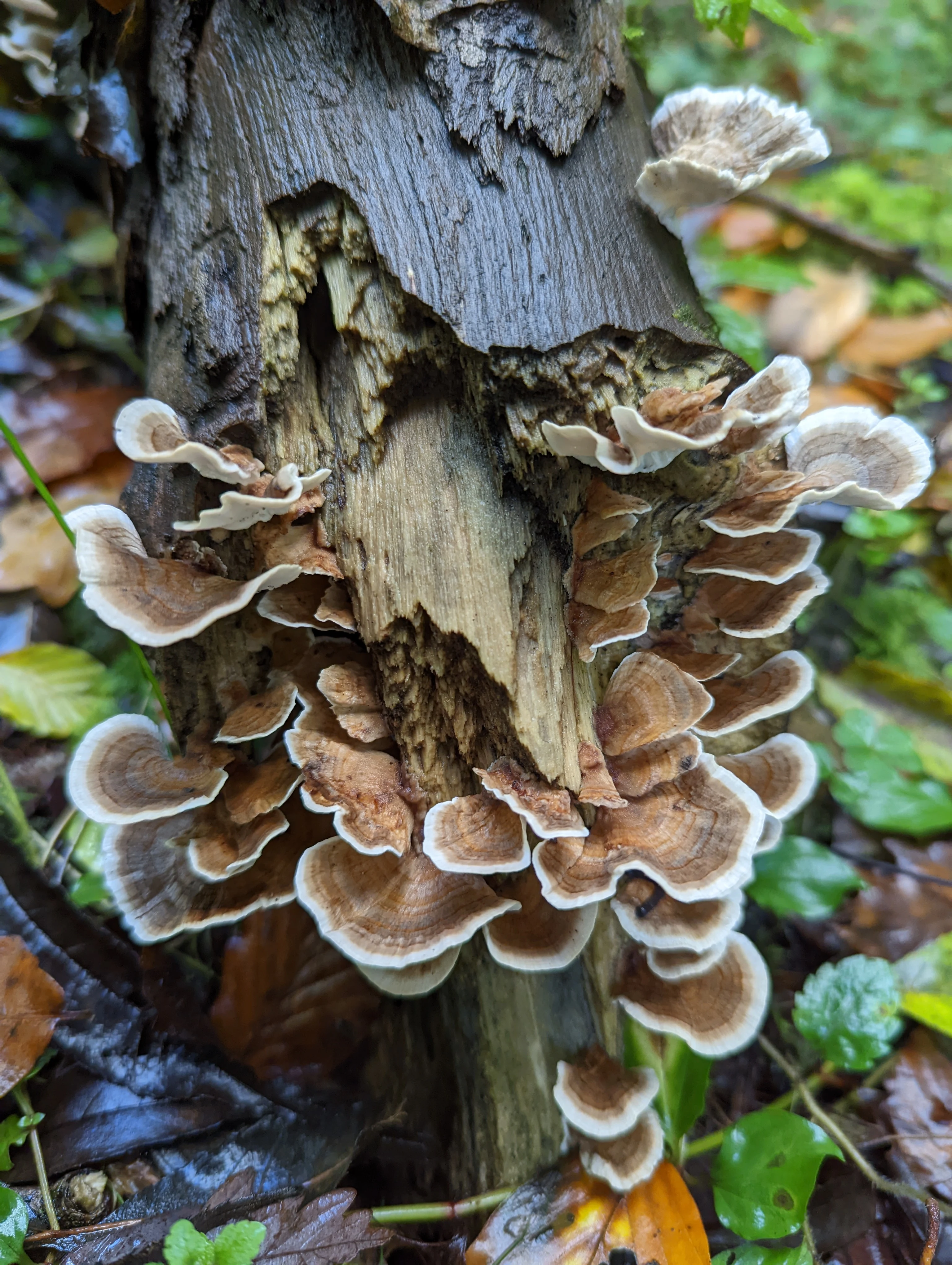
5. Turkey Tail (Trametes versicolor)
Colourful, fan-shaped brackets that stack like shelves on dead wood. Historically used as decoration for hats and home displays.
FAQs
Q: Do fungi grow in winter?
A: Yes. While fungi peak in autumn, many species, such as Velvet Shank and Winter Chanterelle, fruit throughout winter.
Q: Why are fungi important in winter?
A: Their underground mycelium breaks down organic material, enriches soil, and supports trees and plants during their dormant period.
Q: Where is the best place to spot winter fungi in the UK?
A: Woodlands, parks, dead wood, grassy fields, and organic farmland like Yeo Valley, where healthy soil supports diverse fungi.
Q: Are winter fungi safe to forage?
A: Some are edible, some are not. Always consult a trained mycologist, many fungi look similar and can be toxic.